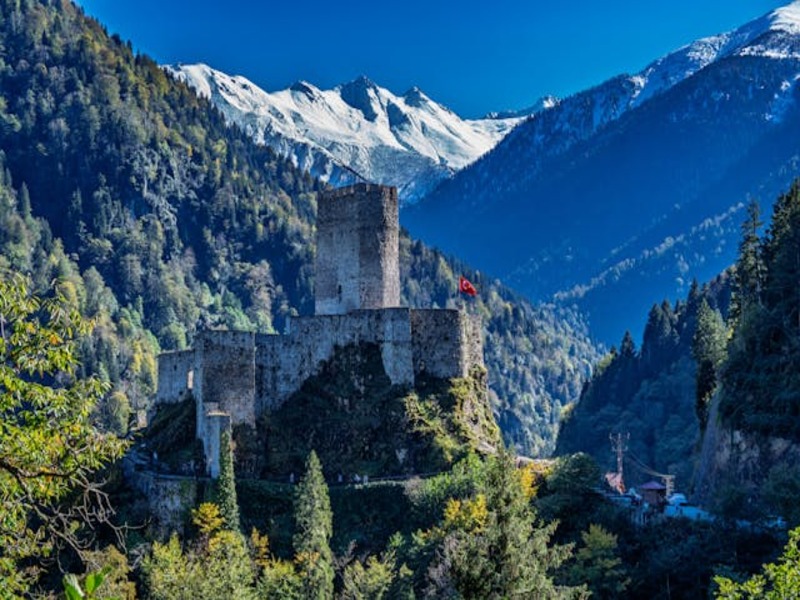
- Black Sea Coast
A Hidden Gem of Culture and Nature
Stretching along Turkey’s northern edge, the Black Sea coast is a world apart from the country’s sun-drenched Mediterranean beaches. Here, emerald-green mountains meet misty shores, and a rich cultural tapestry unfolds in small fishing villages, bustling port towns, and highland plateaus. This is a land where tea plantations cascade down hillsides, hazelnuts dry along roadside blankets, and age-old traditions thrive in the shadow of the Kaçkar Mountains.
A Landscape Shaped by Rain and Tradition
Unlike the arid interior of Anatolia, the Black Sea region is lush and verdant, nourished by frequent rains that keep the landscape vibrant even in summer. Dairy farms, tea gardens, and hazelnut orchards dominate the countryside, while fishermen haul in the day’s catch from the chilly waters of the Black Sea. Along the winding coastal roads, it’s common to see farmers spreading hazelnuts under the sun to dry—a golden carpet lining the asphalt.
A Culinary Journey Through Unique Flavors
The region’s cuisine is hearty and distinctive, shaped by its climate and cultural influences. One must-try dish is muhlama, a rich, bubbling fondue-like blend of cheese, cornmeal, and butter, best enjoyed with freshly baked cornbread. Another delight is Laz böreği, delicate layers of flaky pastry filled with sweet custard and dusted with powdered sugar—a testament to the region’s love for both savory and sweet flavors. In the highland villages, meals often feature sarma (stuffed cabbage rolls) and lahana lobia (a comforting stew of cabbage and beans), reflecting the simplicity and warmth of rural life.
The Living Heritage of the Laz and Hemsin Peoples
Beyond the landscapes and flavors, the Black Sea coast is home to vibrant ethnic communities with deep-rooted traditions. Near Rize, the Laz people—known for their colorful woven shawls and resilient maritime culture—maintain a distinct identity, while the Hemsin of Ayder are famed for their striking traditional dress, including intricate silk headscarves. Their languages and customs set them apart from mainstream Turkish culture, offering visitors a glimpse into a lesser-known Anatolia.
A Road Less Traveled
Exploring the Black Sea coast requires patience—narrow, serpentine roads wind through steep cliffs and fog-draped valleys, making travel slow but breathtaking. East of Sinop, the landscape grows wilder, with tea terraces and tobacco fields giving way to the rugged Kaçkar Mountains. The journey from Trabzon to the highland village of Ayder is particularly dramatic, where waterfalls plunge down mossy cliffs and wooden Ottoman-era houses cling to the hillsides.
A Refuge for the Curious Traveler
While the Black Sea lacks the tourist crowds of Turkey’s southern coasts, it rewards those who venture here with authenticity. Whether sipping tea in a Rize garden, hiking through the Kaçkar’s alpine meadows, or sharing a meal with locals in a Hemsin village, this region offers a rare blend of natural beauty and living tradition. For those willing to take the slow road, Turkey’s Black Sea coast is an unforgettable escape into a world where time moves to the rhythm of the seasons.