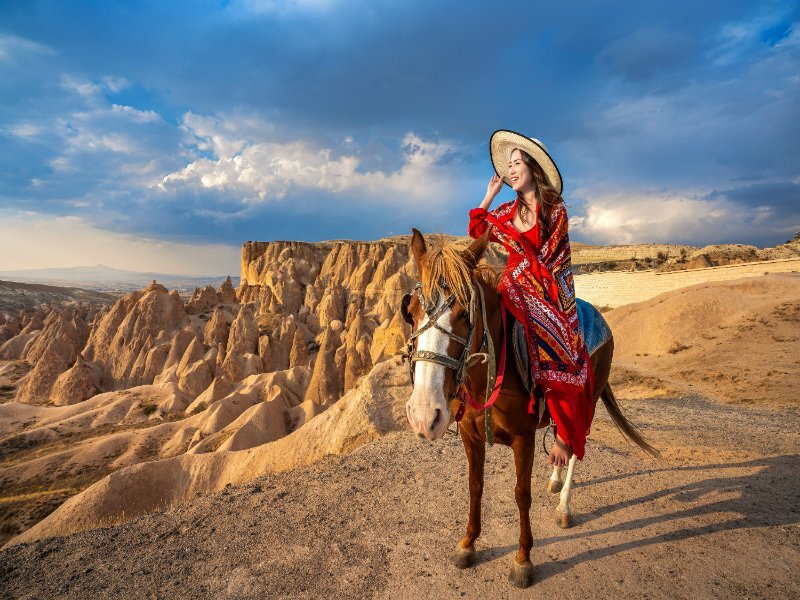
- Central Anatolia
The Soul of Turkey
Beneath the vast, sunbaked plains of Central Anatolia lies the essence of Turkey—a land where empires rose and fell, where ancient caravans once traced dusty routes, and where modern cities hum with quiet ambition. This is the country’s heartland, a place of stark beauty and deep history, where the past lingers in crumbling caravanserais, in the whispers of Sufi mystics, and in the labyrinthine depths of underground cities.
A Tapestry of Civilizations
For millennia, this region has been a crossroads. The Hittites built their capital at Hattuşa, leaving behind towering stone lions and cryptic inscriptions. The Phrygians, with their legendary King Midas, carved tombs into the cliffs of Gordion. Later, the Seljuks adorned Konya with exquisite mosques and madrasas, while Ottoman merchants filled Safranbolu with grand timber-framed mansions.
Today, the landscape tells these stories in fragments—a Byzantine fresco peeking through volcanic rock in Cappadocia, a Seljuk caravanserai standing lonely by the highway, the echoing chambers of Derinkuyu, where early Christians hid from persecution.
Cappadocia: Beyond the Fairy Chimneys
Most travelers come for Cappadocia, and rightly so. The surreal valleys of Göreme, with their wind-sculpted rock formations, are unlike anywhere else on earth. At dawn, hot air balloons drift above the cliffs, casting shadows over hidden churches and abandoned cave dwellings. But beyond the postcard views, there’s a quieter magic—walking the Ihlara Gorge, where a river cuts through a canyon lined with frescoed chapels, or sipping tea in Avanos, where potters still shape clay as their ancestors did.
Konya: Mysticism and Modernity
Further south, Konya pulses with a different energy. This is the home of Rumi, the 13th-century poet and mystic whose followers, the Whirling Dervishes, still perform their mesmerizing sema ceremony. The Mevlana Museum, with its turquoise-tiled tomb, draws pilgrims and curious travelers alike. Yet outside the old city, Konya is also a thriving commercial hub, where conservative values blend with rapid development—a microcosm of modern Turkey’s contradictions.
Ankara: The Capital’s Contrasts
Many rush through Ankara, Turkey’s often-overlooked capital, but those who stay discover a city of layered identities. The Museum of Anatolian Civilizations holds artifacts spanning 10,000 years, while the imposing Atatürk Mausoleum reflects the republic’s founding ideals. In the backstreets of Ulus, old men play backgammon in shadowy cafés, a world away from the glass towers of the diplomatic quarter.
Hidden Corners and Slow Travel
For those who venture off the main routes, Central Anatolia rewards patience. Amasya, with its Ottoman houses clinging to a cliffside above the Yeşilırmak River, feels frozen in time. Sivas, once a Seljuk stronghold, boasts some of the finest medieval architecture in Turkey. And in Safranbolu, the past feels alive in the creak of wooden floors and the scent of saffron-infused desserts.
When to Go
Spring (April–June) brings carpets of wildflowers and crisp mornings perfect for exploration. Autumn (September–October) offers golden light and harvest festivals. Winters can be harsh, but Cappadocia under snow is ethereal, while summer demands early starts to beat the heat.
The Spirit of the Land
This is not the Turkey of postcards—no turquoise coastlines, no bustling bazaars (though there are plenty of those too). Instead, Central Anatolia offers something deeper: a chance to walk in the footsteps of forgotten kingdoms, to feel the weight of history in silent valleys, and to understand the quiet resilience of a region that has shaped Turkey’s soul.
To travel here is to see beyond the surface, to find beauty in the austere, and to carry a piece of Anatolia’s enduring spirit long after the journey ends.