Ahtamar Island
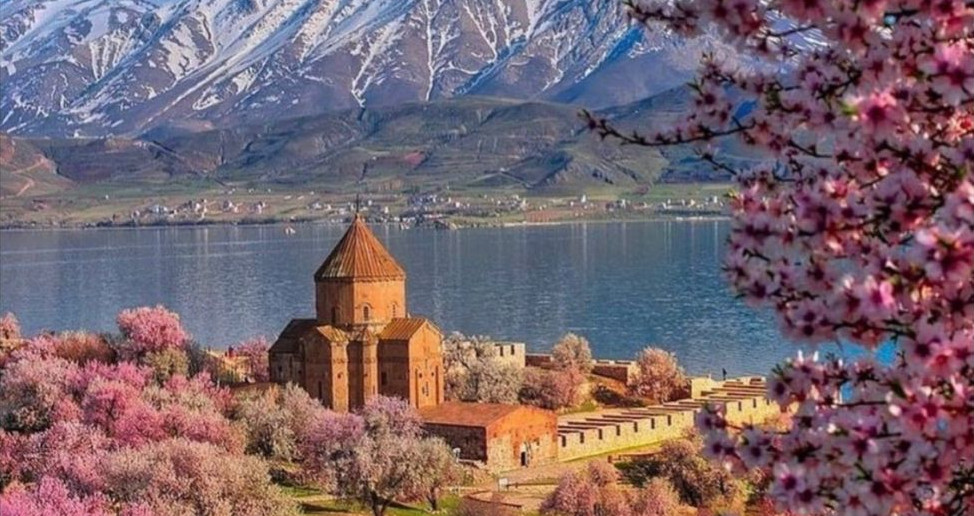
In the middle of the deep blue waters of Lake Van, Turkey's largest lake, lies Akhtamar Island, shining like a pearl. It is a captivating treasure with its natural beauty, deep-rooted history, and a poignant love legend. This small island is not just a physical location but also a gateway to a past spanning over a thousand years, finely carved stone stories, and humanity's collective memory.
Nature’s Four-Season Spectacle
Akhtamar Island dresses in different attire each season. In winter, the island and the surrounding mountains are covered in pure white snow, enveloped in a serene silence that brings peace to the observer. With the first warm breath of spring, the almond trees on the island awaken, adorning it with the softest shades of pink and white. This revival meets the deep blue of summer, while autumn brings the warmth of gold and orange to the island. This cycle promises visitors a different landscape and emotion with every visit.
Transportation and Visit
Access to the island is provided by motorboats departing from the pier in Gevaş district of Van. This short journey across the calm waters of the lake is like a moment of purification, preparing visitors for a journey through time.
The Millennia-Old Stone Witness: Akdamar (Holy Cross) Church
At the heart of the island stands the Akdamar Church (officially the Church of the Holy Cross), built between 915–920 by Vaspurakan King Gagik I. This structure, a rare example of Armenian architecture and medieval stone masonry, now serves as a monument-museum and occasionally hosts religious ceremonies.
The true magic of the church lies in the rich reliefs covering its exterior, depicting scenes from the Bible and religious history. These stone pages can be read like an open-air library:
- Eastern Façade: This section features saints and figures of great importance to the Armenian Church, including Saint Gregory the Illuminator, John the Baptist, Saint Bartholomew, Saint Thaddeus, Prophet Adam, Abbasid Caliph Al-Muqtadir, Gospel writer Saint John, Prophet Elijah, and the "Scene of the Widow of Zarephath."
- Western Façade: One of the most striking scenes is located here: King Gagik I presenting a model of the church to Jesus Christ. Additionally, there are figures of saints such as Saint Martin, Stephanos, Sophanias, and Osoria within medallions, and just below them, the depiction of Prophet Jonah warning the King of Nineveh and being swallowed by a fantastical fish.
- General Reliefs: On the other façades of the church, scenes from the Holy Scriptures present a history of religions carved in stone:
- The sacrifice of Isaac by Prophet Abraham
- Moses receiving the Ten Commandments
- The Virgin Mary and the Child Jesus
- David and Goliath in battle
- Adam and Eve eating the forbidden fruit
- The Three Hebrew Youths cast into the fiery furnace
- Prophet Daniel in the lions' den
These reliefs are not merely a religious narrative; they also provide invaluable information about the clothing, social life, and artistic understanding of the period.
The Island Named After Love: The "Ah, Tamara!" Legend
The name Akhtamar originates from a tragic love story passed down through generations in these lands. According to legend, the beautiful Tamara, who lived on the island, and a young man from the opposite shore secretly met by signaling with lamps. When Tamara's father discovered their meetings, he grew furious. On a stormy night, the father lit the lamp on the island. Seeing the light, the young man, hoping to reach his beloved, jumped into the lake despite the storm. However, he could not withstand the raging waves of the lake. As he was drowning, he is said to have cried out with his last breath, "Ah, Tamara!" This cry of anguish is believed to have transformed over time into the island's name.
Akhtamar Island is far more than an ordinary tourist spot. The landscapes generously offered by nature, the language of millennia-old history carved in stone, and a love legend reflecting humanity's universal emotions come together here in perfect harmony. This small island in the middle of Lake Van invites visitors to both a visual feast and a deep journey through time; it is a monument of art and history where every stone holds a story, and every landscape conceals a blend of sorrow and hope.
Last Modification : 9/18/2026 12:36:56 AM