The Mardin Reyhani Night
A Portrait of a Reyhani Night
When one thinks of Mardin, the first things that come to mind are its narrow streets of intricately carved stone, terraces overlooking the golden plains of the Southeast, and the deep silence stretching toward the Mesopotamian plain. Yet behind this silence lies a rhythm that has not fallen silent for centuries: the rising breath of the drum and zurna at a Reyhani Night.
A Tradition Rooted in Centuries
The Reyhani Night, also known as Leyli Night, is one of Mardin’s most deep-rooted and authentic traditions. These nights are far more than just dance and entertainment; they are a social ritual that has held together Mardin’s multicultural fabric for centuries.
The name "Reyhani" comes from the reyhan (basil) flower, which symbolizes beauty, pleasant scent, and elegance. The dance’s graceful and gentle movements are associated with this flower’s sweet fragrance and poise. According to some academic studies, the name may also be linked to the word for "soul" (ruh), imbuing the dance with a spiritual meaning. This ancient tradition is registered in UNESCO’s Intangible Cultural Heritage Inventory and has a history spanning approximately 300 years.
The Flow of the Night: A Cultural Feast
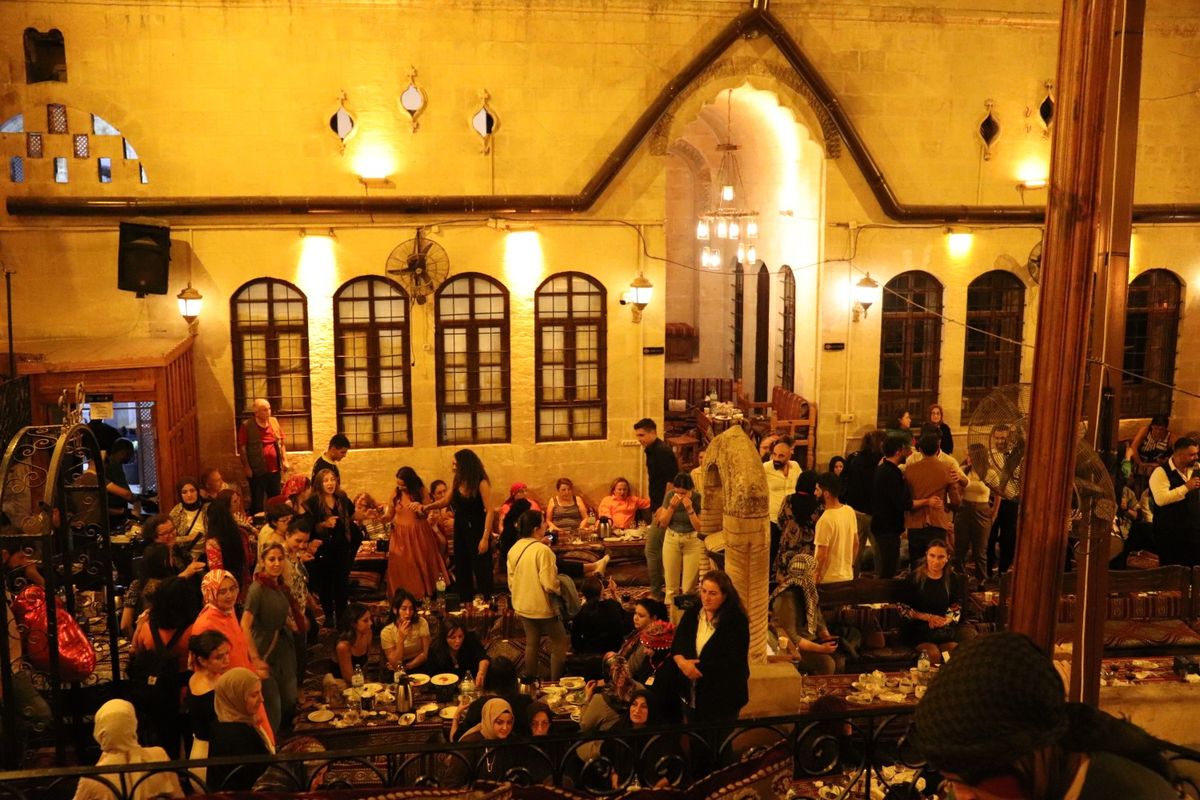
A Reyhani Night begins at sunset. As the shadows of the stone houses lengthen, the first sounds of the frame drum (bendir) and tambourine (tef) are heard from the narrow streets. People gather; it could be for a wedding, a circumcision, an engagement, or bidding farewell to a soldier. The Leyli Nights, derived from the Arabic word layl meaning "night," are these special celebrations organized for such communal rites of passage.
When the music starts, a transformation occurs within the space. The deep rumble of the drum (davul) vibrates through the ground, while the shrill sound of the zurna echoes off the stone walls and rises toward the sky. The bendir and baglama complete this ensemble of instruments. However, the most important feature distinguishing Reyhani from other dances is its richness of language and rhythm. During these nights, Syriac hymns, Arabic songs, Kurdish dengbêj (epic storytelling) performances, Armenian melodies, and Turkish folk songs blend together. Sometimes, pieces in eight different languages are performed in a single night. Everyone sings in their own language, and everyone finds themselves within the same dance.
The Magic of the Dance: Grace and Harmony
When the dance begins, the scene resembles a forest of trees. Hands gently rest on shoulders, wrists lock together. The circle grows larger and larger. The Reyhani dance is typically performed by two people facing each other or by holding hands in a circle. The basic movement of the dance is slowly squatting down and then rising again while opening the arms to the sides. This movement symbolizes respect for the earth and longing for the sky.
The steps are neither too fast nor too slow; everything progresses in harmony. In the figures danced by two people facing each other, a conversation begins. They look into each other’s eyes, smile, and bow their heads slightly in greeting. There is no competition here, no showmanship; only grace, harmony, and a sense of belonging.
The Ritual of the Table: Mirra and Reyhani Sherbet
Another hero of the night is the table. Mirra, the bitter coffee unique to the region, boils in small cezves (long-handled pots). Drinking mirra is a slow ritual that extends a hand to another’s heart. Reyhani sherbet, as its name suggests, is as delicate and refreshing as the dance itself. Raw meatballs (çiğköfte), stuffed meatballs (içli köfte), and regional kebabs adorn the tables. Every bite, every sip, transforms the night into a feast.
The Reyhani Night Today: A Reviving Heritage
This tradition, which began to fade into oblivion with modernization and migration, has been revived in recent years by both municipalities and private entrepreneurs. Founded in 2019, the Modern Mardin Nights Group has brought the "Leyli Night" and "Reyhani" to the stage, promoting this culture in many parts of Turkey, especially in Istanbul.
These nights are now also organized for domestic and foreign tourists visiting Mardin, playing an important role in promoting the region’s music and dance. You can experience this night by attending "Mardin Night" events through hotels or travel agencies in Mardin. These modern interpretations, of course, cannot fully capture the authenticity of the old neighborhood squares; but they are a beginning, a reminder, a form of resistance.
The Mardin Reyhani Night is an ancient celebration that brings together thousands of years of Mesopotamian heritage with graceful dance figures, multilingual melodies, and unique flavors, strengthening social solidarity. Reyhani is a culture’s resistance to time. It is the peaceful character of a city that melts different languages and beliefs in a single pot.
In the shadow of stone houses, on a night scented with basil, everyone awakened by the sound of the drum knows this: it is not bodies dancing tonight, but the will to live together for centuries.
If you ever go to Mardin and come across a Reyhani Night, do not just watch from afar. Reach out your hand, join the circle. Remember, the scent of basil knows no boundaries; just like this ancient rhythm beating in Mardin’s heart of stone.
Last Modification : 9/17/2026 11:24:44 PM