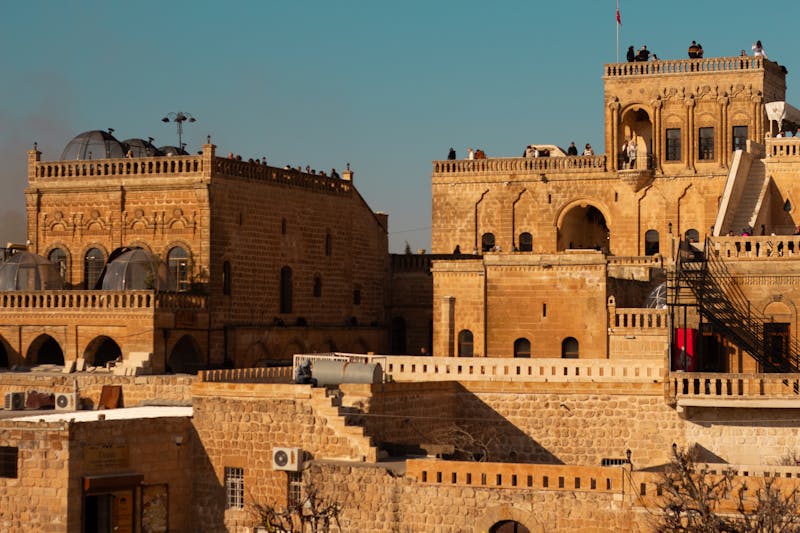
Midyat is one of the richest districts in terms of history and culture in the southeastern Turkish province of Mardin. With its narrow streets showcasing masterful stonework, millennia-old monasteries, traditional mansions, handicrafts, and unique cuisine, Midyat is nothing short of an open-air museum. This ancient city, which has been home to numerous civilizations, stands out not only as the heart of faith tourism but also for its handicrafts and flavors that carry thousand-year-old traditions into the present day. This article brings together the key sites that reflect the soul of Midyat and its cultural heritage.
The Series Sıla and Midyat's Introduction to Turkey
There is no doubt that the television series Sıla played a major role in making Midyat as famous as it is today across Turkey. Aired between 2006 and 2008 and starring İbrahim Çelikkol and Cansu Dere, the series introduced Turkish audiences to Midyat's enchanting stone architecture, narrow streets, historic houses, and cultural richness. Midyat, one of the main filming locations, effectively turned into an open-air studio. Tamerbey Street became etched in the hearts of millions thanks to the series; the historic houses and streets used in the show became sites of memory for viewers.
The interest generated by Sıla caused a surge in tourism to Midyat. During the years the series aired and thereafter, the city saw an influx of domestic and international tourists, gaining significant economic and cultural vitality. Today, many visitors come to this ancient land specifically to walk the streets where the series was filmed, see the famous stone houses, and follow in the footsteps of Sıla and Boran. The series not only helped establish Midyat as a tourism destination but also created significant awareness for the preservation and promotion of the city's cultural heritage.
Midyat Clock Tower: The Pulse of the City
One of the first symbols that comes to mind when Midyat is mentioned is the Midyat Clock Tower. Rising in the city center, this tower is a fine example of late Ottoman architecture. Constructed from cut stone, the tower serves as a symbolic landmark that bears witness to the past while acting as a modern-day meeting point. Greeting visitors with a historic salute, the clock tower bridges the past and present in the heart of Midyat. Occasionally seen in the background in Sıla, this tower has become etched in memory as the city's symbol.
The Heart of Faith Tourism: Monasteries and Churches
Midyat is one of the centers where the ancient Syriac tradition is most vibrantly preserved. Mor Gabriel Monastery, located 20 kilometers east of the district, was founded in 397 AD and is one of the oldest Syriac monasteries in the world. This sacred site, where worship has continued uninterrupted for millennia, is an essential destination for faith tourism.
In the city center stand Mor Hobil-Mor Abrohom Monastery and Mor Barsamo Church. Mor Barsamo Church captivates visitors with the finesse of its stonework and architectural details. These sacred structures are the finest evidence that Midyat is a city of tolerance where different faiths have coexisted for centuries.
Historic Mansions: Treasures of Midyat's Civil Architecture
The most prominent structures reflecting Midyat's historical fabric are its mansions. Midyat Konuk Evi (Midyat Guest House) and Hükümet Kadın Konağı (Government Women's Mansion) showcase the stonework, courtyard-centered architecture, and interior richness of traditional Midyat houses. These mansions are cultural treasures that bring past daily life into the present. Gelişke Han is another significant structure that has stood for centuries on an ancient caravan route, serving as a crossroads of trade and accommodation. Caravanserais and mansions, as the beating heart of Midyat's commercial and social life, act as guardians of the city's cultural memory.
A Walk Through Stone Streets: Tamerbey Street
To experience Midyat's captivating atmosphere, one must walk along Tamerbey Street. Lined on both sides with historic stone houses, this street is an open-air gallery with its boutique shops, cobblestone paths, and picture-perfect scenes. Hosting some of the most iconic scenes of Sıla, this street has become an open-air museum for fans of the series. The stone houses and street texture featured in the show are among the top spots where visitors take photos. As you stroll, you can also closely observe Midyat's traditional handicrafts. These narrow streets are among the best routes to discover the soul of Midyat.
Memory on the Body: Midyat Deq Tattoo
Another significant cultural element associated with Midyat is the tradition of deq (tattoo). These traditional tattoos, seen especially on the hands, faces, and bodies of women, bear traces of belonging, faith, fertility, and aesthetic sensibility. Each pattern carries different symbolic meanings—protection, luck, faith, or social status—making deq one of the most special parts of Midyat's intangible cultural heritage. Although this tradition has declined today, it continues to be preserved as a form of cultural memory.
A Thousand-Year-Old Flavor: Syriac Wine
One of the most important values in Midyat's gastronomic world is Syriac wine. Nourished by Mesopotamia's millennia-old viticulture tradition, Syriac wine is produced using the region's ancient grapes and natural methods passed down through generations. Monasteries in the region, particularly Mor Gabriel Monastery, have been centers of this wine production for centuries. Syriac wine is not merely a beverage but also a sacred element used in religious rites and an integral part of the cultural identity. Visitors to Midyat have the opportunity to taste this ancient wine and embark on a flavor journey through Mesopotamia.
Elegance Carved in Stone: Midyat Silver Craftsmanship
When it comes to Midyat's handicrafts, silverwork is one of the first things that come to mind. Crafted using the filigree technique, Midyat silver is world-renowned for its fine workmanship, delicate patterns, and unique motifs. Produced in a wide range from earrings and necklaces to bracelets and belts, these pieces carry the symbols of Syriac culture, nature, and geometric designs. In the narrow streets of Midyat, you can witness masters keeping this thousand-year-old tradition alive in their silver workshops. Silver craftsmanship is one of the most valuable pieces of Midyat's cultural heritage, attracting great interest both domestically and internationally.
Stops for Flavor: Kafro's Pizzeria and Midyat Cuisine
Midyat is not only the capital of stone and history but also of flavor. Alongside traditional Syriac cuisine, the city offers venues catering to different palates. Kafro's Pizzeria, a modern stop for flavor within the historical fabric, attracts the interest of both local and foreign visitors. The richness of Midyat's cuisine meets different interpretations in such places. However, Midyat is not just about pizza; thousand-year-old flavors such as stuffed meatballs (içli köfte), sıro (a local dish), stuffed ribs (kaburga dolması), and Syriac wine also take center stage.
Where Culture and History Meet: Museum and Culture House
Midyat City Museum is an important cultural center showcasing the district's thousand-year history, archaeological finds, and ethnographic richness. Midyat Culture House, housed in a traditional Midyat dwelling, offers visitors a glimpse into past lifestyles, clothing, handicrafts, and daily life culture. Both institutions stand out for their mission to preserve and transmit Midyat's cultural memory.
The Mystery of Nature and History: Midyat Caves
The caves around Midyat shed light on both the region's geological structure and its history. Used throughout history as shelters, storage areas, workshops, and places of worship, these caves are archaeological sites waiting to be explored, with their rock carvings and human-shaped interiors. The caves are mysterious stops that illuminate Midyat's underground history.