Following the conquest of Constantinople in 1453, Sultan Mehmed II, known as Fatih (the Conqueror), sought to establish a new imperial palace that would reflect the grandeur of the Ottoman Empire. The result was Topkapı Palace—referred to in Ottoman chronicles as Saray-ı Cedid (the New Palace)—a sprawling complex that became the political and ceremonial heart of the empire for nearly four centuries.
The Strategic Choice of Location
The sultan selected a 592,600-square-meter plot on the ancient Byzantine acropolis, an area once covered with olive groves and partially inhabited. Before finalizing the site, Mehmed II consulted with architects and engineers who had studied royal palaces across different kingdoms, ensuring the location had sufficient water sources and assessing construction costs. The land was acquired from both Muslim and non-Muslim owners, and the terrain was meticulously leveled, with terraces built into the steep slopes descending toward the sea—a feature later depicted in maps by European cartographers such as Giovanni Andrea Vavassore and Wilhelm Dilich.
The Architectural Masterpiece
The palace was constructed in three main courtyards, each serving distinct functions, reflecting the hierarchical and ceremonial nature of Ottoman rule.
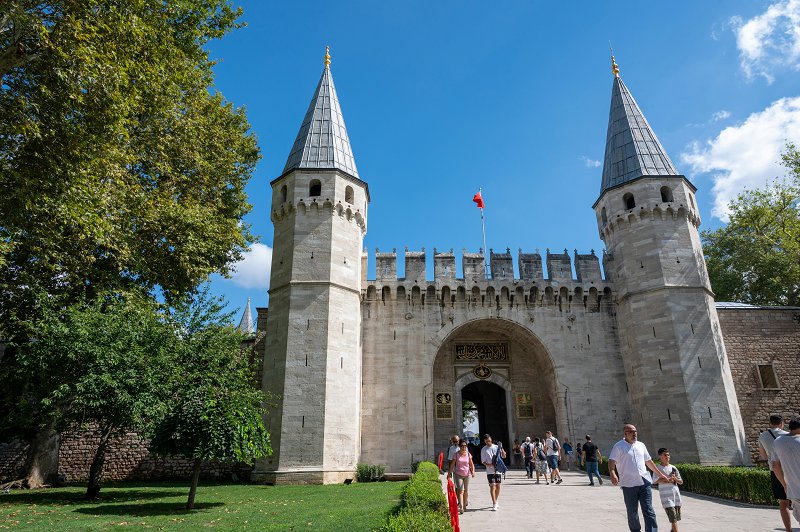
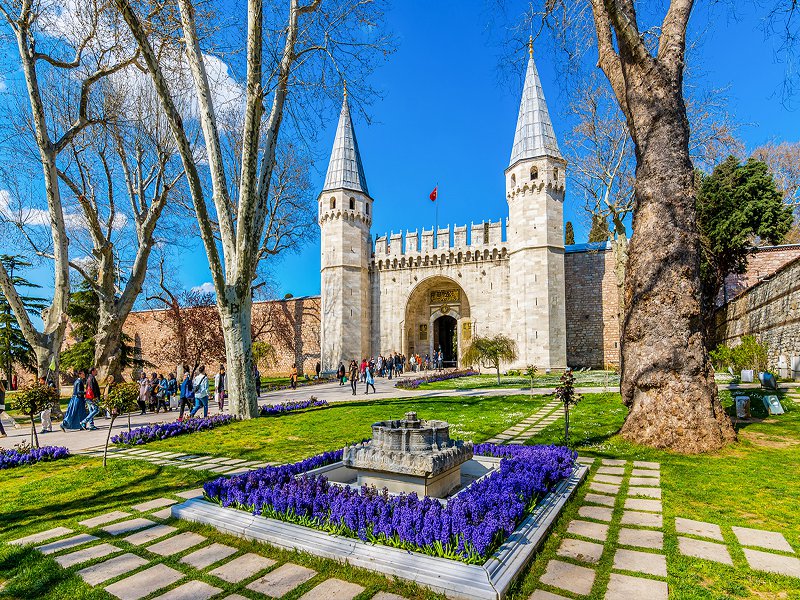
The First Courtyard (Alay Meydanı), entered through the Imperial Gate (Bab-ı Hümayun), was accessible to the public and housed administrative offices, kitchens, and service quarters. Its imposing walls, completed by November–December 1478, enclosed the entire complex, creating a fortified yet majestic presence.
The Second Courtyard was the empire’s administrative core, featuring the Imperial Council Hall (Divan-ı Hümayun), where state affairs were deliberated, and the Tower of Justice, symbolizing the sultan’s supreme authority. Unlike European palaces, Topkapı was not a single monumental structure but a carefully arranged sequence of pavilions, gardens, and functional spaces.
**The Third Courtyard **(Enderun), beyond the Gate of Felicity (Babüssaade), was the sultan’s private domain. Here, the imperial treasury, the throne room, and the palace school for elite pages were located. Adjacent to this was the Harem, a secluded quarter housing the sultan’s family and concubines, designed with intricate tilework and lush courtyards.
Beyond these lay the Fourth Courtyard, a serene retreat of terraced gardens, kiosks, and pavilions overlooking the Golden Horn and the Bosphorus. The Revan and Baghdad Kiosks, built to commemorate Ottoman victories, stand as testaments to the palace’s blend of functionality and artistic splendor.
A Palace Evolving with Time
Early accounts, such as those by the Genoese merchant Iacopo de Promontorio in 1475, describe the palace before its outer walls were completed, noting only two courtyards. By the late 15th century, however, Topkapı had taken its final form—a harmonious fusion of power, privacy, and prestige.
Unlike the monumental European palaces, Topkapı’s brilliance lay in its modular design, where open courtyards, gardens, and interconnected pavilions allowed for both grand ceremonies and intimate royal life. Its strategic position on the Seraglio Point offered sweeping views of Istanbul, reinforcing the sultan’s dominance over land and sea.
Legacy of an Imperial Seat
For over 400 years, Topkapı Palace remained the empire’s political center, witnessing the reigns of sultans, the intrigues of courtiers, and the evolution of Ottoman governance. Today, as a UNESCO World Heritage Site, it stands not just as an architectural wonder but as a symbol of an empire that once bridged continents and cultures.
Through its courtyards, gateways, and hidden gardens, Topkapı Palace continues to tell the story of an empire that shaped history—one courtyard at a time.