Topkapi Palace History: Where Is It and When Was It Built?
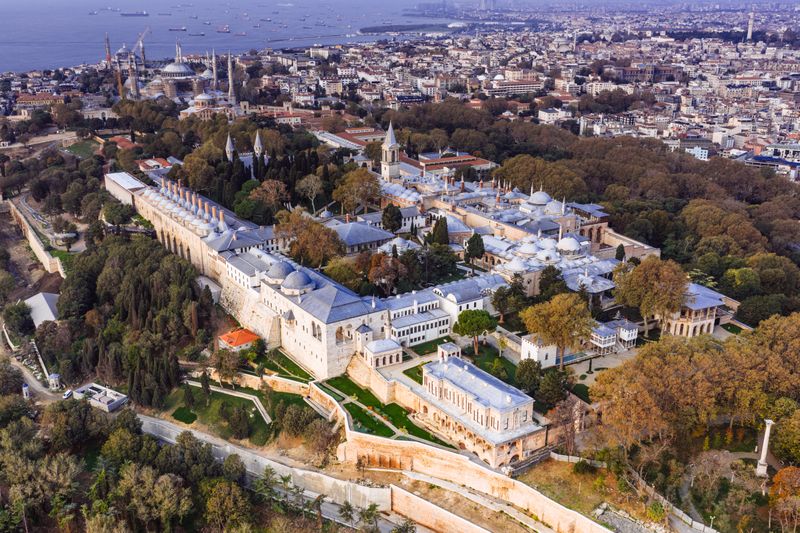
One of Istanbul’s most important historical landmarks, Topkapi Palace served as the administrative center of the Ottoman Empire and the residence of its sultans for approximately four centuries. Commissioned by Sultan Mehmed II, also known as Mehmed the Conqueror, in the 15th century, the palace reflects not only Ottoman history but also Istanbul’s rich heritage, stretching from the Byzantine era to the Ottoman period. Located at Seraglio Point (Sarayburnu) on Istanbul’s historic peninsula, Topkapi Palace occupies a strategic position overlooking the Golden Horn, the Sea of Marmara, and the entrance to the Bosphorus. Today, the palace is a museum and one of Istanbul’s most significant cultural heritage sites, renowned for its architecture, courtyards, pavilions, and historical collections. But when was Topkapi Palace built? Why was it constructed at Seraglio Point? And how did it become the political and administrative heart of the Ottoman Empire?
Where Is Topkapi Palace?
Topkapi Palace is located on the European side of Istanbul, at the tip of the historic peninsula in an area known as Seraglio Point. It stands close to several major historical landmarks, including Hagia Sophia, the Blue Mosque, and the Istanbul Archaeological Museums. The palace’s location provided significant strategic advantages for centuries. Surrounded by the sea on three sides and overlooking the entrance to the Bosphorus and the Golden Horn, the site was ideally suited to serve as the residence of Ottoman rulers and the center of imperial administration. However, to understand the history of Topkapi Palace, we must look much further back than the Ottoman period.
The History of Topkapi Palace: From Ancient Byzantion to Constantinople
The area occupied by Topkapi Palace is associated with the acropolis of ancient Byzantion, a settlement traditionally dated to the 7th century BC and founded by Greek colonists from Megara. Situated between the Golden Horn, the Bosphorus, and the Sea of Marmara, Byzantion occupied a strategically important position along the maritime trade routes connecting the Black Sea with the Mediterranean. Throughout antiquity, the city became involved in regional power struggles before entering a new phase of development under Roman rule. During the reign of Roman Emperor Septimius Severus, Byzantion suffered extensive destruction in the late 2nd century AD amid political and military conflicts. The city was subsequently rebuilt and expanded. One of the most significant turning points in the city’s history came when Emperor Constantine I selected Byzantion as the site of a new imperial capital. In AD 330, the city was formally inaugurated as Constantinople, eventually becoming one of the most important political, economic, and cultural centers of the Eastern Roman Empire. The area now occupied by Topkapi Palace preserves traces of this long history. Surviving structures and archaeological remains help visitors understand Istanbul’s past before the Ottoman conquest.
Sultan Mehmed the Conqueror and the Conquest of Constantinople
After conquering Constantinople in 1453, Sultan Mehmed II initiated an extensive program of reconstruction and urban development to transform the city into the capital of the Ottoman Empire. The first Ottoman palace in the newly conquered city was established in the area of today’s Beyazıt Square. This complex later became known as the Old Palace (Eski Saray) and served as one of the earliest major centers of the Ottoman court in Istanbul. However, Mehmed the Conqueror required a larger and more secure palace complex to meet the needs of his expanding capital. The strategic position of Seraglio Point made it an ideal location for this new imperial residence. The site associated with the ancient acropolis of Byzantion was therefore selected for the construction of a new center of Ottoman power.
When Was Topkapi Palace Built?
Construction of Topkapi Palace began during the reign of Sultan Mehmed II, generally dated to the 1460s, and the main complex came into use during the 1470s. The palace was not completed in a single phase. Subsequent sultans continued to expand, renovate, and adapt its buildings over the centuries. Initially known as the New Palace (Yeni Saray), the complex developed according to the administrative and residential needs of the Ottoman court. As the new palace became the principal center of government, the earlier palace near Beyazıt became known as the Old Palace. The new palace’s defensible location contributed to its role as both the sultan’s residence and the administrative heart of the empire. The name Topkapi Palace became established later in the complex’s history. The original designation, New Palace, gradually gave way to the name by which the palace is known today.
Architectural Features of Topkapi Palace
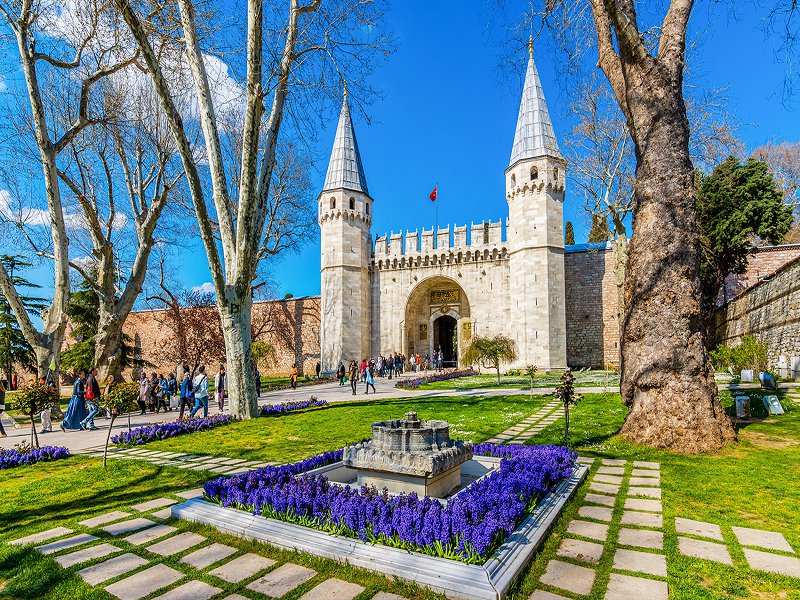
Unlike many European royal residences, Topkapi Palace was not designed as a single monumental building. Instead, it developed as an extensive complex of courtyards, pavilions, administrative buildings, service areas, and private residential quarters. This layout separated the different functions of Ottoman court life while reflecting the structure of the imperial administration. The palace’s courtyards were organized according to different levels of access and use. Areas for government officials, ceremonial spaces, and private quarters for the sultan served distinct purposes within the palace. Construction began under Mehmed the Conqueror and continued through successive reigns, with new buildings and architectural modifications introduced over time. As a result, Topkapi Palace offers a unique opportunity to explore the architectural styles and changing tastes of different periods of Ottoman history.
The Tiled Pavilion: A Monument from the Reign of Mehmed the Conqueror
The Tiled Pavilion (Çinili Köşk) is an important monument for understanding the early architectural heritage associated with Topkapi Palace. Commissioned during the reign of Sultan Mehmed II, it is now part of the Istanbul Archaeological Museums complex. The pavilion is distinguished by its architectural decoration and intricate tilework. It is one of the significant surviving examples of early Ottoman architecture and reflects the artistic preferences of the period. Its presence demonstrates that construction around the imperial palace was not limited to administrative and defensive needs. It also served the ruler’s interests in art, representation, and private life.
The Development of the Imperial Harem at Topkapi Palace
One of the most famous sections of Topkapi Palace is the Imperial Harem. Beyond being the private residential area of the Ottoman dynasty, the Harem played an important role in court hierarchy and the organization of dynastic life. However, it would be inaccurate to attribute the entire architectural layout of the Harem as it exists today to the reign of Mehmed the Conqueror. The complex expanded considerably over subsequent centuries, with new buildings and modifications introduced under different sultans. These changes illustrate how Topkapi Palace remained a living and evolving complex rather than a structure completed according to a single architectural plan. Studying the Harem offers insights not only into the private lives of the Ottoman dynasty but also into the social relationships, hierarchy, and traditions that shaped life at the imperial court.
The Importance of Topkapi Palace in Ottoman History
For approximately four centuries, Topkapi Palace served as one of the Ottoman Empire’s principal centers of government and royal residence. State affairs were conducted here, important ceremonies took place, and the daily life of the Ottoman dynasty revolved around the palace and its institutions. Its historical significance extends far beyond its architecture. The palace provides an invaluable setting for understanding the Ottoman administrative system, imperial traditions, and concepts of sovereignty. During the 19th century, Ottoman sultans increasingly used other palaces as their primary residences, changing Topkapi Palace’s role as a royal home. Nevertheless, it continued to be one of the most important symbols of Ottoman history and cultural heritage. Today, Topkapi Palace operates as a museum and remains one of the most significant attractions on Istanbul’s historic peninsula.
Why Should You Visit Topkapi Palace?
Visiting Topkapi Palace offers the opportunity to experience Ottoman history firsthand rather than simply reading about it in books. The palace’s courtyards, pavilions, historic buildings, and collections reveal different aspects of the political and cultural world of the Ottoman Empire. Its location at Seraglio Point also provides an excellent perspective on Istanbul’s geography and its strategic importance throughout history. Combined with visits to nearby landmarks such as Hagia Sophia and the Istanbul Archaeological Museums, Topkapi Palace is an ideal starting point for exploring the Byzantine and Ottoman heritage of Istanbul. For visitors who want to understand the stories behind the architecture, a guided tour can bring the palace’s history, ceremonies, and royal traditions to life.
Topkapi Palace and Istanbul’s Layered History
Although the history of Topkapi Palace as an Ottoman imperial residence began after the conquest of Constantinople by Sultan Mehmed II, the history of the surrounding area reaches back to ancient Byzantion. Seraglio Point, associated with the ancient city’s acropolis, became the administrative center of the Ottoman Empire after the Roman and Byzantine periods. Construction initiated during Mehmed the Conqueror’s reign continued under successive sultans, gradually creating the palace complex we see today. Today, Topkapi Palace is an exceptional cultural heritage site for discovering the lives of Ottoman sultans, understanding the imperial administration, and exploring Istanbul’s history spanning thousands of years. Whether you are passionate about Ottoman history, Byzantine heritage, or Istanbul’s architectural treasures, Topkapi Palace offers a remarkable journey into the past. Discover the stories behind the palace and explore Istanbul’s historic landmarks with Istanbul Guide Services, offering private guided tours tailored to your interests and schedule.
Publish this as an informative English-language article and link naturally to your private Istanbul tours page. Use the anchor text “Explore Topkapi Palace with a licensed private tour guide in Istanbul.” This connects visitors researching the palace’s history with your guiding services without making the article overly promotional.
Last Modification : 11/2/2026 4:01:13 AM