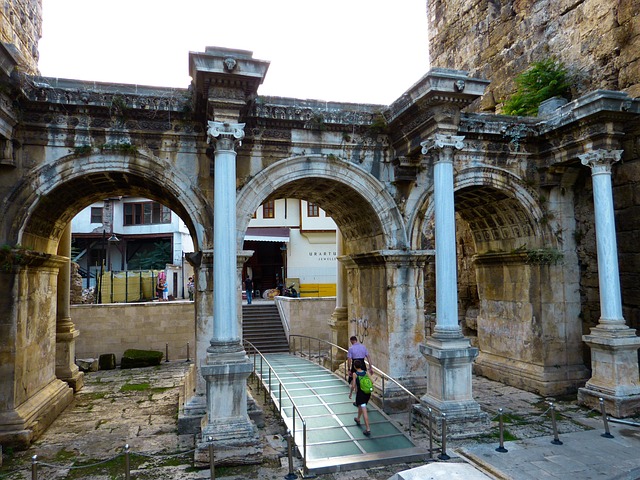
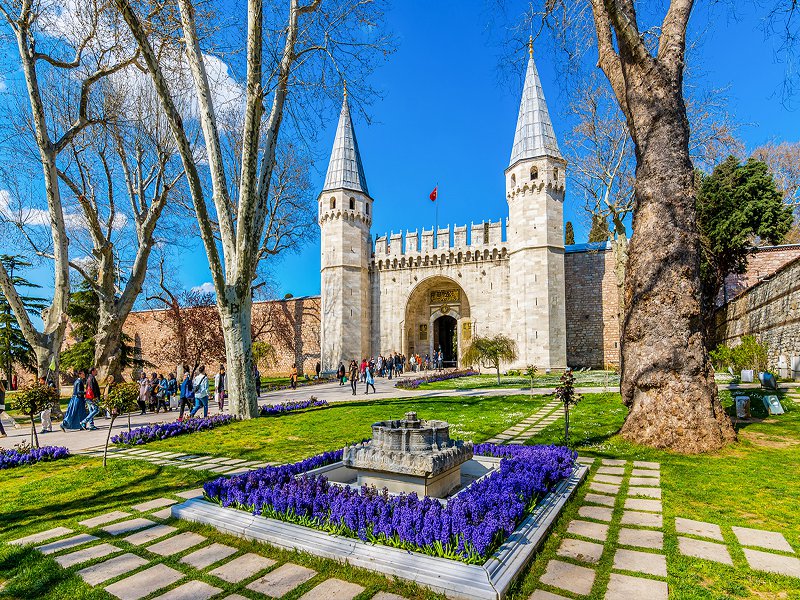
When one thinks of Antalya, the first things that come to mind are its blue-flag beaches and its palm-lined waterfront. However, the true heart of this city beats in Kaleiçi, a hidden treasure nestled right in the city's core. Meaning "Inner Castle," this historic area is much more than just a tourist spot. Like an open-air museum, Kaleiçi takes you on a journey through two thousand years of history from the moment you step through its gates.
In the Footsteps of the City's Founder: King Attalos II
The story of Kaleiçi and modern Antalya begins in the 2nd century BC with King Attalos II of Pergamon. Legend has it that the king, who commanded his men to "Find me heaven on earth," sent his soldiers to search for the most beautiful corner of the world. They discovered this magnificent bay surrounded by clear waters and fertile lands, and brought the news to the king. Thereupon, Attalos II ordered the city to be founded and named it "Attaleia." Today, the Statue of King Attalos II, located at a point overlooking the historic harbor in the heart of the city, stands as an eternal reminder of this ancient founding story. Standing next to the statue and looking out at the harbor, you can almost imagine the inspiring view that the king saw.
A Walk Through the Layers of History
As you wander through the narrow, labyrinthine, cobblestone streets of Kaleiçi, you encounter traces of different civilizations with every step. The area has played host to the Romans, Byzantines, Seljuks, and finally the Ottoman Empire, each weaving a thread of their own cultural fabric into its identity. The ancient harbor from the Roman period remains one of the city's most serene corners, where yachts still glide and cafes line the shore.
Symbol of the Seljuks: The Fluted Minaret
One of the most iconic structures defining Kaleiçi's silhouette is, without a doubt, the Yivli Minare (Fluted Minaret). Built in the 13th century during the reign of Sultan Alaeddin Keykubad I, this unique masterpiece, with its red bricks and distinctive fluted grooves, has become virtually the symbol of Antalya. The minaret is a glorious emblem of the city's conquest and of Anatolian Seljuk architecture. Together with the adjacent Yivli Minare Mosque, theological school, and Mevlevi Lodge, it forms a complex and is tangible proof of the deep-rooted presence of the Turkish era in these lands.
A Monument of Tolerance: The Broken Minaret
Right next to the harbor, the once-magnificent Kesik Minare (Broken Minarete), or Korkut Mosque, is one of Kaleiçi's most poignant and talked-about structures. This site has sequentially served as a Roman temple, then a great Byzantine basilica, a mosque during the Seljuk period, and again a mosque in the Ottoman era. Unfortunately, it was devastated by a fire in the 19th century, leaving only a portion of its minaret and walls standing. Even in this state, it remains a powerful monument, showcasing how different faiths and cultures converged in the same space, symbolizing both the ravages of time and remarkable resilience.
The Guardian of the Ancient Port: Hıdırlık Tower
Rising on a rocky outcrop in the southwestern corner of Kaleiçi, Hıdırlık Tower offers you another relic from the Roman period. Built in the 2nd century AD, this cylindrical structure once served as a lighthouse or a defensive tower controlling the harbor and the ships entering and leaving it. Today, it offers one of the most impressive views in the city, especially at sunset. From the top or the surroundings of the tower, you can witness the breathtaking panorama of the turquoise Mediterranean, the historic harbor, and the entire Kaleiçi skyline.
Time Travel in a Historic Mansion: Antalya City Museum-Kaleiçi
For those who want to experience the historic texture of Kaleiçi not just by walking its streets but by stepping inside an Ottoman mansion, there is a perfect address: the Antalya City Museum-Kaleiçi. Housed in a restored traditional Turkish mansion, this museum can be visited free of charge. Here, you can find objects, photographs, and displays related to Antalya's recent past, daily life, culture, and social history. This intimate museum, where you can feel the interior structure, rooms, and atmosphere of a traditional mansion, is a priceless opportunity to understand the soul of the city beyond its stones.
Traces of Modern Turkey: Republic Square and the Atatürk Statue
As you step out of Kaleiçi into the modern city center, you are greeted by Cumhuriyet Meydanı (Republic Square) and the majestic Atatürk Statue that dominates it. Depicting Atatürk, the founder of the Republic of Turkey, on horseback in military attire, this statue symbolizes his love for the city and Antalya's importance in the modernization process. This square is the meeting point of ancient Attaleia, Seljuk and Ottoman Antalya, with the modern Turkish Republic. The words on the pedestal, "Without a doubt, Antalya is the most beautiful place in the world," seem to echo the sentiments of King Attalos II from two thousand years ago.
Sunset at the Harbor and Lively Streets
The best thing to do towards the end of the day in Kaleiçi is to descend to the ancient harbor and watch the sun set behind the blue waters of the Mediterranean. A break for tea or Turkish coffee in one of the cafes lining the harbor is a balm for tired feet. When evening falls, Kaleiçi transforms with a different energy. Live music from restaurants, the aromas of grilled fish, and the cheerful chatter of people filling the streets add a festive air to this historic labyrinth. Here, you can taste the most delicious examples of both traditional Turkish cuisine and fresh seafood.
Antalya's Kaleiçi is a place that must be seen not only by tourists but also by anyone interested in history, culture, and architecture. Every moment spent here pulls you away from the hustle and bustle of the modern world and invites you into the serene, romantic atmosphere of the past. The journey from King Attalos II to Atatürk, from the Fluted Minaret to the Broken Minaret, from Hıdırlık Tower to the free City Museum is a living lesson in how a city acquires a trans-civilizational identity. Getting lost in its stone streets, shopping in its colorful stores, dining in the courtyard of a historic house—in short, living Kaleiçi—will be an unforgettable part of your trip to Antalya. Because Kaleiçi is a breathing space where history is not just read, but felt.