
Why Is Cappadocia So Famous?
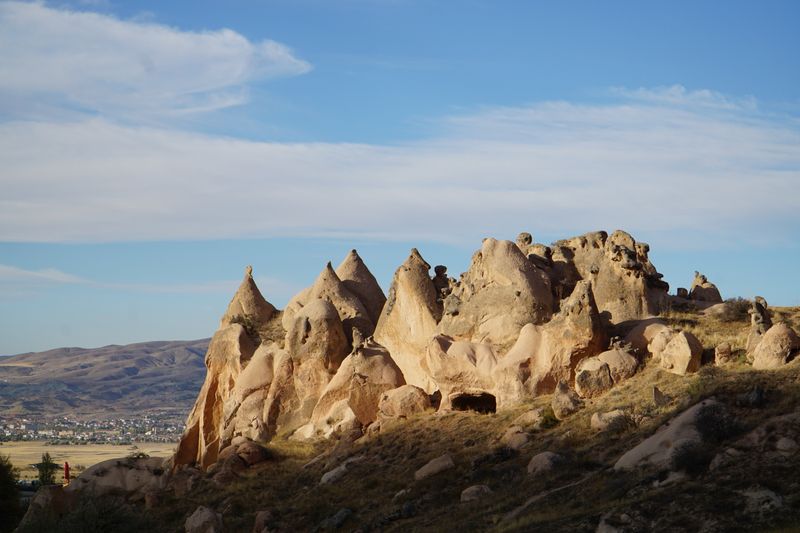
One of Türkiye's most fascinating tourist destinations, Cappadocia, is internationally famous for its fairy chimneys, extraordinary rock formations, underground cities, rock-cut churches, and hot air balloon flights.
However, what makes Cappadocia truly special is not simply its natural beauty. Over thousands of years, different civilizations adapted to this remarkable landscape and developed unique ways of living within it. As a result, Cappadocia has become an extraordinary cultural heritage destination where nature and human history come together.
Two major factors explain Cappadocia's international reputation: millions of years of geological processes and thousands of years of human history.
To understand what makes this region so remarkable, we must first explore how nature created its extraordinary landscape and then discover how people transformed these unusual rock formations into places to live, worship, and work.
1. The Geological Formation of Cappadocia: How Were the Fairy Chimneys Formed?
The landscape of Cappadocia is the result of millions of years of volcanic activity and natural erosion.
Its geological history is closely connected to three major volcanoes: Mount Erciyes, Mount Hasan, and Göllüdağ. Their eruptions spread enormous quantities of volcanic ash, lava, and other materials across Central Anatolia.
Over time, these volcanic deposits formed layers of relatively soft rock known as tuff. Volcanic Eruptions Millions of years ago, intense volcanic activity shaped the landscape of Central Anatolia. Three particularly important volcanic centers were:
- Mount Erciyes: One of the major sources of volcanic material in the region.
- Mount Hasan: Played an important role in shaping the volcanic landscape southwest of Cappadocia.
- Göllüdağ: Another important center in the region's volcanic history. Materials released by these volcanoes accumulated over time, creating layers of volcanic rock with different degrees of hardness. How Were the Fairy Chimneys Formed? The formation of fairy chimneys was a gradual process involving millions of years of erosion.
- Volcanic eruptions created thick layers of tuff.
- Rainwater and flowing streams gradually began to erode the softer volcanic rock.
- Wind and temperature changes accelerated the erosion process.
- Harder rock formations protected the softer rock beneath them, while the surrounding material gradually disappeared.
- Eventually, the familiar cone-shaped formations known as fairy chimneys emerged. These formations are examples of distinctive landforms created through differential erosion and the protection provided by harder rock layers.
The fairy chimneys are not merely spectacular natural structures. They also provide an opportunity to observe the geological transformation of a landscape over millions of years.
2. The History of Cappadocia: From Early Settlements to the Hittites
Cappadocia is important not only for its natural formations but also for its place in the long history of Anatolia.
People have inhabited this region since prehistoric times. The relatively soft volcanic rock made it possible to carve shelters, storage rooms, and permanent living spaces. The Hittites and Cappadocia During the second millennium BC, the Hittites established one of the most powerful political states in Anatolia.
Cappadocia was part of this important historical region. During the Hittite period, the area was connected to trade and communication networks linking Central Anatolia with Mesopotamia and Syria.
Following the Hittites, other civilizations and political powers, including the Phrygians, Persians, and Hellenistic kingdoms, left their marks on the region. The Persian Period and the Kingdom of Cappadocia In the 6th century BC, the Persian Empire extended its control over Anatolia, and Cappadocia became part of its administrative system.
The name Katpatuka appears in ancient Persian sources. Although its exact etymology remains debated, the historical development of the name Cappadocia is associated with this ancient designation.
Following Alexander the Great's conquest of the Persian Empire, the political balance of Anatolia changed. The Kingdom of Cappadocia subsequently emerged.
The kingdom existed approximately from the 3rd century BC until the 1st century AD, when the region eventually came under Roman control.
3. The Roman and Byzantine Periods: Cappadocia as a Center of Christianity
One of the most significant periods in Cappadocia's history was the Roman and Byzantine era.
In AD 17, during the reign of Emperor Tiberius, Cappadocia became a Roman province. Its strategic position near the eastern frontiers of the Roman Empire gave the region considerable importance.
However, the development that greatly increased Cappadocia's significance in world history was the spread of Christianity. The First Christian Communities As Christianity spread throughout the Roman Empire, Anatolia became one of its most important regions.
Cappadocia's rocky landscape provided an ideal environment for Christians seeking solitude, establishing religious communities, and developing monastic traditions.
From the 4th century onward, monastic life became increasingly important throughout the region.
Three major Christian theologians and religious figures are particularly associated with Cappadocia:
- Basil the Great: Played a major role in organizing Christian monastic life.
- Gregory of Nazianzus: Made significant contributions to the development of Christian theology.
- Gregory of Nyssa: Influenced the philosophical and theological development of Christianity. These three figures are collectively known as the Cappadocian Fathers, an important group in the history of Christianity.
Rock-Cut Churches and Frescoes
One of Cappadocia's most remarkable cultural features is its churches and monasteries carved directly into the rock.
Numerous rock-cut churches can be found around Göreme. Their interior walls are decorated with frescoes depicting scenes from the Bible, the life of Jesus Christ, the Virgin Mary, and various Christian saints.
Some of the most important examples include:
- Tokalı Church: One of the most significant Byzantine rock-cut churches in the region.
- Dark Church (Karanlık Kilise): Famous for its remarkably well-preserved frescoes.
- Apple Church (Elmalı Kilise): Notable for its biblical scenes and wall paintings.
- St. Barbara Church: Important for its architectural features and religious paintings.
- Snake Church (Yılanlı Kilise): Contains interesting examples of Christian iconography. These churches are particularly valuable for understanding Byzantine art, especially between the 10th and 13th centuries.
4. The Underground Cities of Cappadocia: Why Did People Live Underground?
One of the features that makes Cappadocia unique in the world is its underground cities.
Taking advantage of the easily carved volcanic tuff, people created extensive underground settlements consisting of multiple levels.
These structures were not built exclusively for residential purposes. They also served as places of refuge, food storage, and shelter for livestock.
Derinkuyu Underground City
Derinkuyu is one of the best-known underground settlements in Cappadocia.
Visitors can explore narrow corridors, rooms, storage areas, ventilation shafts, wells, and various communal spaces.
Different levels of the underground city are connected by passages. Large circular stone doors allowed certain entrances and corridors to be sealed from the inside.
These systems helped inhabitants protect themselves during periods of danger.
Kaymaklı Underground City
Kaymaklı is another important example of Cappadocia's extensive underground settlement system.
The settlement contains living quarters, kitchens, storage rooms, stables, and ventilation systems. Why Were Underground Cities Built? Several factors contributed to the development of these underground settlements:
- The region's easily carved volcanic rock.
- The need for protection during periods of attack and political instability.
- The necessity of storing food and other supplies securely.
- The desire to create protected living spaces for entire communities. From the 7th century onward, political and military threats in the region influenced the continued use and development of underground settlements.
However, it would be inaccurate to suggest that all these structures were built during a single period or exclusively to protect inhabitants from Arab raids. Underground settlements were expanded over different centuries and served multiple purposes.
5. Cappadocia During the Seljuk and Ottoman Periods
Following the Battle of Manzikert in 1071, Turkish political influence in Anatolia gradually expanded, and Cappadocia entered a new historical period.
During the Seljuk era, the region was located along important trade routes connecting different parts of Anatolia. Caravanserais played a significant role in facilitating trade and travel.
One of the most important examples of Seljuk architecture is the Sultanhanı Caravanserai, which provides valuable insight into the commercial and architectural heritage of the period.
During the Ottoman era, Cappadocia continued to develop through agriculture, animal husbandry, trade, and traditional crafts.
Pottery production in Avanos and viticulture and wine production around Ürgüp became important economic activities.
The region's cultural identity also reflects the historical presence of Turkish, Greek, and other Anatolian communities.
6. The Most Important Tourist Attractions in Cappadocia
Cappadocia's international reputation is not based on a single attraction. Instead, the region offers a remarkable combination of natural landscapes, historical monuments, and traditional settlements.
- Göreme Open-Air Museum One of Cappadocia's most important historical sites, featuring rock-cut churches, monasteries, and Byzantine frescoes.
- Uçhisar Castle A historic settlement carved into a massive volcanic rock formation, offering spectacular panoramic views.
- Paşabağ (Monks Valley) Famous for its unusual multi-headed fairy chimneys and distinctive rock formations.
- Devrent Valley Known for its natural rock formations that resemble animals and other familiar shapes.
- Love Valley Famous for its unusual rock formations and scenic hiking trails.
- Avanos Located along the Kızılırmak River, Avanos is particularly famous for its traditional pottery workshops.
- Zelve Open-Air Museum An impressive historical settlement featuring rock dwellings, churches, and an abandoned village landscape.
7. Why Is Cappadocia Famous for Hot Air Balloon Flights?
One of the most important factors behind Cappadocia's international tourism reputation is its hot air balloon experience.
At sunrise, hundreds of meters above the ground, colorful balloons float over fairy chimneys and spectacular valleys, creating one of the world's most recognizable travel landscapes.
Several factors make Cappadocia particularly popular for balloon flights:
- Extraordinary scenery featuring valleys and fairy chimneys.
- Favorable flying conditions on suitable days.
- Excellent panoramic views and photography opportunities.
- The unique atmosphere of sunrise.
- An experience that appeals to visitors from all over the world. However, balloon flights depend on weather conditions. Flights may be cancelled due to wind, visibility, or other meteorological safety requirements.
8. Why Is Cappadocia on the UNESCO World Heritage List?
One of the strongest indicators of Cappadocia's international significance is its inclusion on the UNESCO World Heritage List in 1985 under the name Göreme National Park and the Rock Sites of Cappadocia.
It is a mixed natural and cultural heritage site.
UNESCO recognizes the area for several important reasons:
- Artistic value: The exceptional artistic quality of Byzantine frescoes found in rock-cut churches.
- Historical value: Settlements that illustrate religious life and social organization during the Byzantine period.
- Traditional settlements: Communities that adapted to their natural surroundings by creating remarkable rock-cut dwellings.
- Natural beauty: Extraordinary geological formations, including fairy chimneys created through erosion. The protected heritage area includes Göreme National Park, the underground cities of Derinkuyu and Kaymaklı, Karain Pigeon Houses, and Soğanlı, among other important locations.
9. What Makes Cappadocia Unique in the World?
Volcanic landscapes, caves, historical churches, and underground settlements can be found in different parts of the world. However, Cappadocia is particularly remarkable because all these features exist together within the same geographical region and are closely connected.
The main elements contributing to Cappadocia's international reputation can be summarized as follows: Feature Importance Volcanic geology Creates an extraordinary natural landscape Fairy chimneys One of the region's most recognizable symbols Rock-cut churches Important examples of Byzantine art Underground cities Reveal historical lifestyles and defensive architecture Hot air balloon tourism Provides international recognition Traditional architecture Preserves cultural and architectural heritage Traditional crafts Keeps local cultural traditions alive
Cappadocia, a Shared Masterpiece of Nature and Human History
Cappadocia's fame is not simply the result of its beautiful fairy chimneys or spectacular hot air balloon flights. It is a remarkable destination where millions of years of geological transformation meet thousands of years of human history.
Volcanic eruptions created the region's distinctive rock formations, while wind and rain gradually transformed them into fairy chimneys. Over time, people carved these soft rocks into homes, churches, monasteries, storage facilities, and underground cities.
From the Hittites and Persians to the Romans and Byzantines, and later the Seljuks and Ottomans, different civilizations left their marks on this extraordinary landscape.
Today, visitors to Cappadocia discover much more than spectacular scenery. They encounter the geological history of Central Anatolia, the history of Christianity, Byzantine art, and traditional Anatolian culture.
What truly makes Cappadocia special is that a landscape created by nature over millions of years has been transformed by human hands into an extraordinary open-air museum of history.
Last Modification : 11/5/2026 2:03:06 PM