Balıklıgöl: The Sacred Pool of Şanlıurfa
In the heart of Şanlıurfa, one of southeastern Türkiye's most fascinating historical cities, lies a place where history, religion, legend, and local culture come together: Balıklıgöl, often translated as the “Pool of Sacred Fish.” For centuries, this remarkable site has attracted pilgrims, travelers, historians, and curious visitors who come to experience one of the most important spiritual landmarks of Şanlıurfa.
Surrounded by historic mosques, traditional architecture, and the remains of ancient settlements, Balıklıgöl is much more than a beautiful pool. It is deeply connected with the religious traditions surrounding Prophet Abraham (Ibrahim) and has become one of the symbols of Şanlıurfa.
Where Is Balıklıgöl?
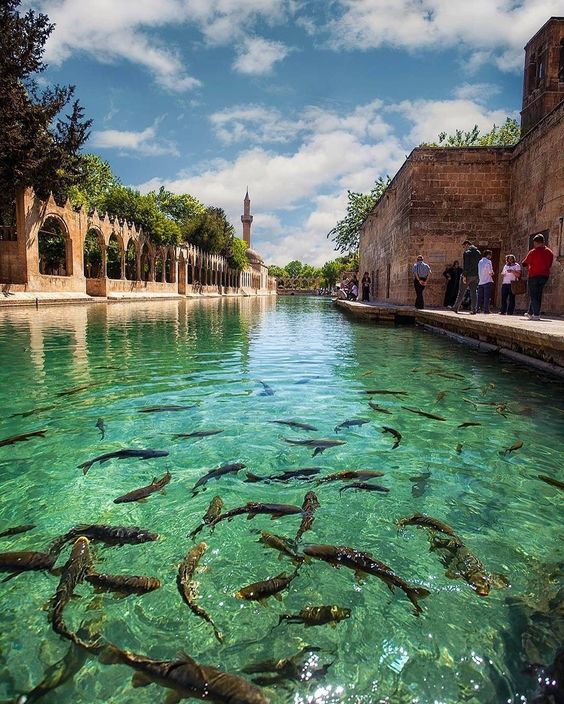
Balıklıgöl is located in the historic center of Şanlıurfa, close to the famous Şanlıurfa Castle. The complex consists of several interconnected religious and historical sites, including Halil-ür Rahman Lake, Ayn Zeliha Lake, the Halil-ür Rahman Mosque, Rızvaniye Mosque, and the surrounding courtyards and gardens. The area is particularly atmospheric in the early morning or late afternoon, when visitors can walk around the pools, observe the fish, visit the mosques, and explore the narrow streets of the old city.
The Legend of Prophet Abraham
The most famous story associated with Balıklıgöl concerns Prophet Abraham, known as Ibrahim in Islamic tradition. According to local tradition, Abraham lived in Urfa during the time of King Nimrod. Abraham opposed the worship of idols and challenged the religious beliefs of the society around him. His rejection of idol worship eventually brought him into conflict with Nimrod. The story says that Nimrod ordered Abraham to be thrown from the hilltop into a huge fire. According to the tradition, however, God commanded the fire to become harmless to Abraham. Instead of burning him, the fire was transformed into water, while the burning pieces of wood became fish. This miraculous event is traditionally associated with the pools of Balıklıgöl. Today, visitors can see hundreds of carp swimming in the pools. These fish are traditionally considered sacred, and catching, harming, or eating them is forbidden. Feeding the fish has instead become an important part of the local tradition and the visitor experience.
The Sacred Fish of Balıklıgöl
The fish are perhaps the most recognizable feature of Balıklıgöl. According to local tradition, these carp are considered sacred because of their connection with the miraculous story of Prophet Abraham. For this reason, catching, harming, or eating the fish is traditionally forbidden. Visitors are expected to respect the fish and allow them to live freely in the pools. Feeding them has become a long-established local tradition, and special food can be purchased around the site. The fish are not simply an attraction for tourists. They are an important part of the spiritual and cultural identity of Balıklıgöl and Şanlıurfa. Many local people continue to treat them with particular respect because of their connection to the story of Abraham. Walking beside the pools, visitors can often see hundreds of carp gathering near the surface. Their presence, together with the historic mosques, gardens, and stone architecture surrounding the water, gives Balıklıgöl a distinctive atmosphere. For photographers and travelers interested in cultural heritage, the sacred fish have also become one of the most recognizable symbols of Şanlıurfa.
Halil-ür Rahman Lake
One of the principal pools at Balıklıgöl is Halil-ür Rahman Lake. The name is associated with Abraham, who is traditionally known in Islamic culture as Khalilullah, meaning “Friend of God.” The lake is surrounded by religious buildings and landscaped areas. At its southern side stands the historic Halil-ür Rahman Mosque, creating one of the most impressive architectural views within the complex. The combination of water, trees, stone architecture, and religious monuments makes this area an important cultural landscape rather than simply a tourist attraction.
Ayn Zeliha Lake
Another pool within the Balıklıgöl complex is Ayn Zeliha, traditionally associated with the story of Nimrod's daughter. According to local legend, when Abraham was thrown into the fire, Zeliha was deeply affected by what happened. Her tears are said to have formed another pool. Although these stories belong to the realm of religious tradition and local legend rather than documented historical events, they remain an important part of Şanlıurfa's cultural heritage. They also demonstrate how stories passed down through generations can shape the identity of a city.
Balıklıgöl and Şanlıurfa's Religious Heritage
Şanlıurfa has long been regarded as one of the important centers of religious culture in the region. The city is frequently associated with Abraham, Job, and other figures from the Abrahamic traditions. For Muslims, Abraham is an important prophet and a central figure in Islamic tradition. He is also a major figure in Judaism and Christianity. This gives Balıklıgöl a significance that extends beyond local history. Visitors from different cultural and religious backgrounds may therefore experience the site in different ways. Some come as pilgrims, others because of an interest in biblical and Islamic history, while many simply want to understand the traditions of one of Türkiye's oldest cultural regions.
Balıklıgöl and the Ancient History of Şanlıurfa
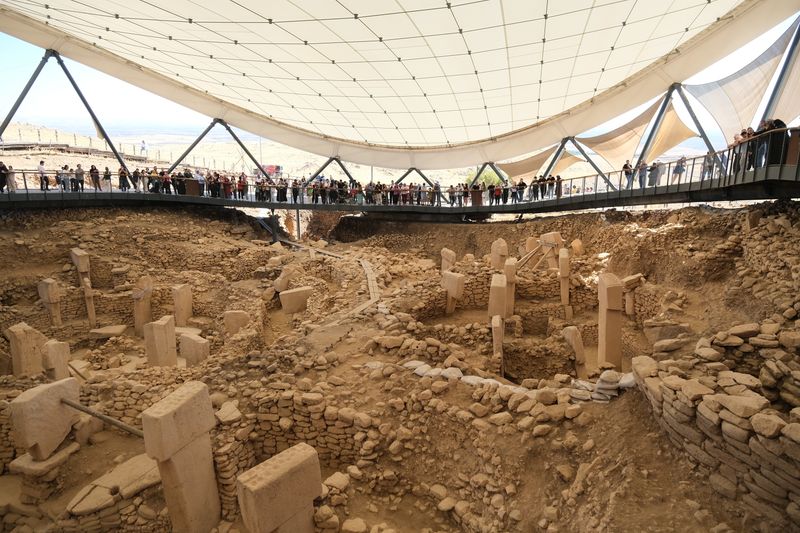
One of the most interesting aspects of visiting Balıklıgöl is its location within a city that has an extraordinarily deep history. Şanlıurfa lies close to some of the world's most important archaeological discoveries. Most famously, Göbekli Tepe, located approximately 15 kilometers northeast of the city center, has transformed our understanding of prehistoric civilization. The monumental structures at Göbekli Tepe date back to the 10th millennium BCE, making them thousands of years older than the earliest cities traditionally associated with civilization. Nearby archaeological sites such as Nevalı Çori and Karahantepe have further demonstrated the importance of the Şanlıurfa region during the Neolithic period. This means that a visit to Balıklıgöl can be part of a much larger historical journey—from prehistoric settlements and the origins of monumental architecture to the religious traditions of the ancient Near East.
What Makes Balıklıgöl Special?
What makes Balıklıgöl particularly fascinating is the combination of several different layers of history. There is the archaeological history of the region, the religious traditions associated with Abraham, the Islamic architectural heritage surrounding the pools, and the living traditions of the people of Şanlıurfa. Few places in Türkiye bring these elements together so visibly. The site is not a museum where history is preserved behind glass. It is a living cultural space. People pray in the surrounding mosques, families visit the pools, visitors feed the fish, and local residents continue traditions that have existed for generations.
Beyond Balıklıgöl: Discover Şanlıurfa's Local Culture
If you have come this far, do not leave Şanlıurfa without experiencing some of the city's other cultural treasures. Just a short distance from Balıklıgöl, the Haleplibahçe Mosaic Museum offers visitors the opportunity to see remarkable Roman-era mosaics discovered in Şanlıurfa. The museum is particularly famous for its detailed mosaics depicting Amazon warriors, as well as scenes from mythology and ancient life. After exploring the ancient mosaics, there is another experience you should not miss: drinking mırra in the historic Gümrük Hanı. Mırra is a strong, bitter and highly concentrated traditional coffee associated particularly with southeastern Türkiye. It is served in very small cups and has a distinctive preparation and serving tradition. For visitors, drinking mırra is not simply about tasting a different type of coffee. It is an opportunity to experience an important part of the social and culinary culture of Şanlıurfa. So, if you have come all the way to Balıklıgöl, take your time. Visit the sacred pools, observe the sacred fish, discover the nearby ancient mosaics, and then sit down in a historic han to taste a small cup of mırra. This combination of sacred tradition, ancient art and local culinary culture makes a visit to Şanlıurfa truly memorable.
A Living Legend in Southeastern Türkiye
Balıklıgöl is ultimately more than a pool filled with fish. It represents the way history, faith, mythology, and living tradition can become intertwined in a city. Whether you visit as a traveler interested in ancient civilizations, a pilgrim exploring the traditions of Abraham, or simply someone looking for an authentic cultural experience in southeastern Türkiye, Balıklıgöl offers a memorable introduction to Şanlıurfa. Standing beside the ancient pools and watching the sacred fish move through the water, it is easy to understand why this place has remained one of the city's most powerful symbols. For anyone exploring the historical heart of southeastern Türkiye, Balıklıgöl should be considered an essential stop—and ideally the starting point for discovering the extraordinary history and living culture of Şanlıurfa.
Last Modification : 9/17/2026 11:22:56 PM